Breath Before Coin • Language Notes

Pronunciation Guide

Reader-friendly approximations for names and terms drawn predominantly from an Igbo‑influenced language base.

Stress is usually on the first syllable unless noted. Doubled consonants should feel weighted, not rushed. The dotted “ọ” is pronounced like the “aw” in “law.”

These spellings are guides meant for flow and clarity in English. Exact tones are not marked, and some consonants may soften or syllabify in context. Notes are included where English ears often trip.

Stress first syllable (unless marked) Hold doubled consonants Ọ = “aw” as in “law” W after U can be soft N can be its own syllable These are approximations
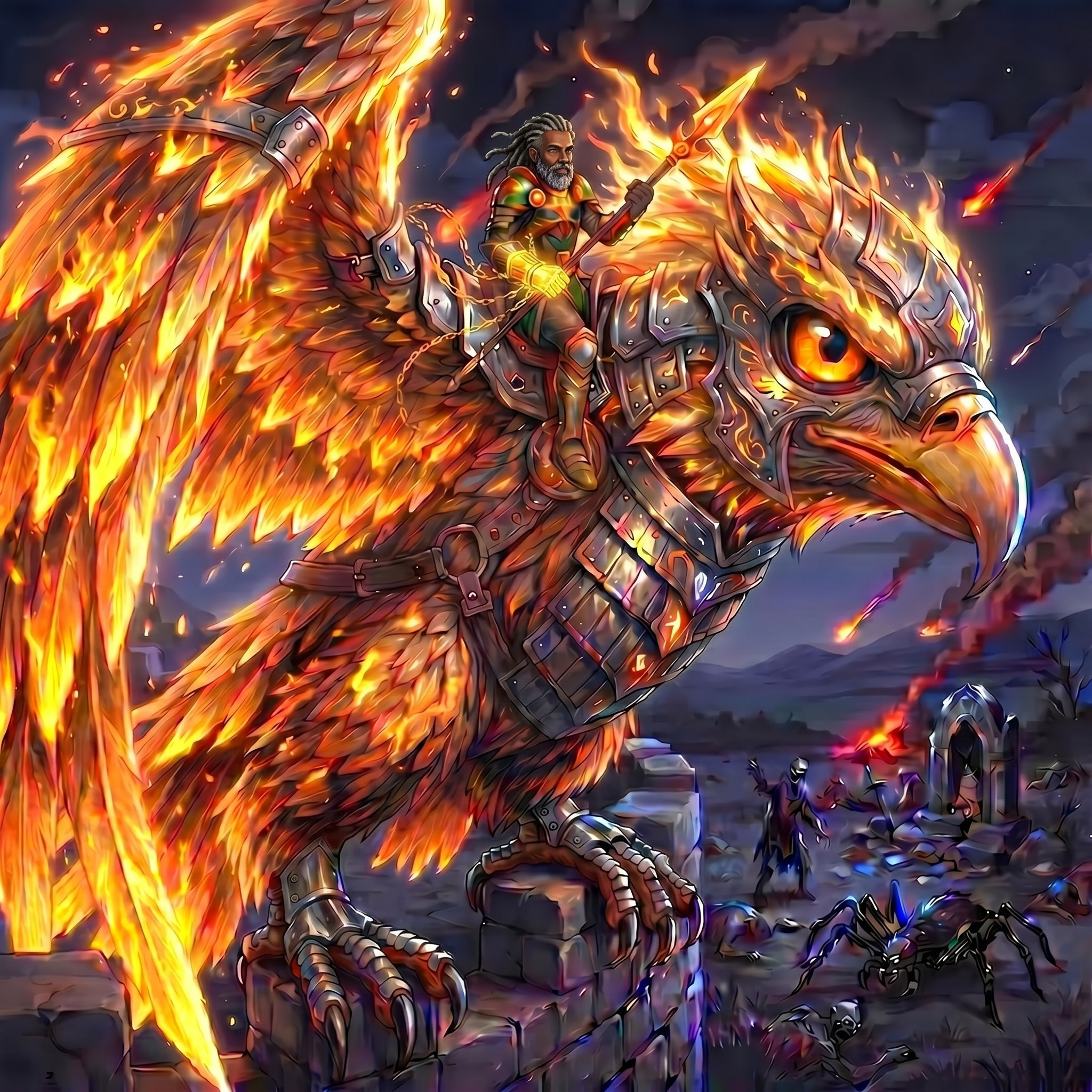
Eri in armour riding Eze Ugo in war form at night, with glowing gauntlet chains, distant monsters, and the Protectorates below.
Eri and Eze Ugo above the Protectorates: patrol, warning, friendship, and the hard discipline of power held back.

How to read these entries

Each entry lists a name followed by a plain‑English pronunciation. Capitals mark the primary stress when it falls away from the first syllable. Short notes flag syllabic consonants, softened W, and common pitfalls.

Afọ—ah-FAW
Agu Iyi—AH-goo EE-yee
Amadioha—ah-mah-dee-OH-hah
Ani—AH-nee
Anioma—ah-nee-OH-mah
Anzû—ahn-ZOO
Chukwu—CHOO-kwoo(W nearly silent)
Echieteka—eh-chee-eh-TEH-kah
Eke—EH-keh(sound like “air-care”)
Ekenma—eh-KEHN-mah
Eri—EH-ree(sounds like “airy”)
Eri-aka—EH-ree AH-kah(sounds like “airy-are-kah”)
Ezu—EH-zoo
Eze—EH-zeh(sound like “air-zair”; means “king”)
Eze Agu—EH-zeh AH-goo(sound like “air-zair are-goo”)
Eze Ugo—EH-zeh OO-go(not “YOU-go”)
Gyanganj—GYAN-ganj(hard G)
Haggi—HAH-gee
Idemili—ee-deh-MEE-lee
Izu—EE-zoo
Kafari—kah-FAH-ree
Kashta—KAHSH-tah
Lamashtu—lah-MAHSH-too
Nef-ball—NEF-ball
Nefertari—neh-fer-TAH-ree
Nka—N-kahThe N is a syllable. Sounds like “oon” or “soon” without the “s”: oon-kah
Nkwọ—N-KWAWsounds like “oon-kwor,” where “oon” sounds like “soon” without “s”
Nnenna—n-NEHN-nahdoubled N is weighted
Nneamakụ—n-neh-ah-MAH-koo
Nweke—n-WEH-keh
Oba Mmiri—OH-bah m-MEE-ree
Obinna—oh-BEEN-nah
Ọja (Ọjà)—aw-JAHsounds like “Or Jah”; a traditional Igbo flute
Ogbologbo—oh-gbo-LOG-bo
Ogochinyere—oh-go-chee-NYEH-reh
Okwankagụlụ—oh-kwan-kah-GOO-loo
Oboli—oh-BOH-lee
Ọmambala—aw-mahm-BAH-lah
Onyelum—oh-nyeh-LOOM(sounds like “or-near-loom”)
Ọnwa—AWN-wah
Orie—OH-ree-eh
Owu Mmiri—OH-woo m-MEE-ree
Raziel—RAH-zee-elor just “Raz”
Shabaka—shah-BAH-kah
Tatabukita—tah-tah-boo-KEE-tah
Ugochi—oo-GOH-chee
Ziphion—ZIH-fee-on
“Say it slowly. Weight the consonant. Let the breath finish the word.”
— Field notes for new readers

Return to the City

Breath Before Coin is a mythic epic of civic law, phoenix fire, river memory, engineered magic, family duty, and a king learning that restraint may be the highest form of power.